
by Earl Smith and Angela J. Hattery
updated; 9/7/2026
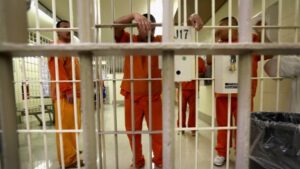
During his tenure in the White House, President Obama has focused some much needed attention to the prison system in the United States, a system that incarcerates more people on non-violent drug offenses than the entire incarcerated population of the European Union, despite having a population that is more than 2 million people larger.
In fact, the United States leads the world in its rate of incarceration, locking up more than 700 people per 100,000, more than 10 times the rate as any of our peer, post-industrial societies, and a rate that exceeds Russia, North Korea and Saudi Arabia, countries that are often thought of as carceral states.
All of this while crime, particularly violent crime, continues to drop.
After the tragic shootings in Baton Rouge and Dallas in July, President Obama gave a “facts” speech in which he noted the racial disparities in traffic stops (blacks are 30 percent more likely to be stopped) and in sentencing (blacks receive sentences that are 20 percent longer than their white counterparts when they are convicted of the same crime).
{mosads}Last month, Obama went one step further in drawing attention to the impact of incarceration on families: “As successful as we’ve been in reducing crime in this country, the extraordinary rate of incarceration of nonviolent offenders has created its own set of problems that are devastating,” he said. “Entire communities have been ravaged where largely men, but some women, are taken out of those communities. Kids are now growing up without parents. It perpetuates a cycle of poverty and disorder in their lives. It is disproportionately young men of color that are being arrested at higher rates, charged and convicted at higher rates, and imprisoned for longer sentences.”
President Obama’s statement is important because it sheds light on the collateral damage that mass incarceration creates. Each day in the United States 6 million children have a parent in prison, most are left behind to be raised by single mothers, grandmothers, and sadly thousands of African American children are moved into the foster care system. But incarceration devastates communities in other ways as well, especially because it is concentrated. In many low-income Black communities, 70 percent of adult men will spend at least some time in prison. They return to their communities having, among other things, lost their rights to vote, an issue that Virginia Gov. Terry McAuliffe is trying to address. Despite his efforts, at every turn, the Virginia assembly turns back the progress on re-instating the voting rights of disenfranchised felons. As a result, our representative democracy is far from representative. In many low-income Black communities, as a direct result of felony drug sentencing, there are not enough people who have retained the right to vote to have any meaningful voice in local, state or national elections. Important issues to consider as both candidates, Trump and Clinton, talk about courting the Black vote
Real prison reform will demand that we, as a society, ask critical questions about the purpose of incarceration and the relative costs and benefits of the current system. For every person we incarcerate at a cost of more than $30,000 per year, how many students in under resourced schools could receive an education that would help to break the intergenerational cycles of poverty, high school dropout, and incarceration? For every drug offender we incarcerate, how many addicts could be successfully treated? And, how many at risk youth could be receive prevention programming that would reduce their probability of ever using drugs to begin with? What is the cost to society when more than a third of Black men will spend some time in prison? What is the cost for caring for the 6 million children who have a parent in prison? At the end of the day we wonder, are these costs worth it? Or, are there more efficient ways to use our resources that ensure that all citizens living in the United States have a shot at achieving the American Dream, for themselves and for their children?
Angela J. Hattery, Ph.D. George Mason University. Earl Smith, Ph.D. George Mason University, professor emeritus, Wake Forest University. To read more, visit our blog at www.smithandhattery.com. Recent books include: Policing Black Bodies: How Black Lives Are Surveilled and How to Work for Change (2024, 2017); Theories of Family Violence (2026); Way Down in the Hole: Race, Intimacy, and the Reproduction of Racial Ideologies in Solitary Confinement (2023); Social Dynamics of Family Violence (2026).